
Port Huron preps “Road Diet” to add bike lanes and link growing trail network
The city plans to reconstruct Huron Avenue by 2027, implementing a road diet that reduces lanes, adds protected bike infrastructure, and connects downtown to the expanding Bridge to Bay Trail.

Port Huron’s main downtown corridor is set for a major transformation by 2027 as the city prepares to put Huron Avenue on a “road diet,” reducing it from four lanes to three and adding protected bike lanes as part of a full reconstruction project.
The work will stretch from the Black River bridge to Glenwood Avenue and will include replacing everything above and below the street—water mains, sewer systems, lighting, asphalt, concrete, landscaping, and more.
A road diet reduces vehicle lanes to make space for other uses. In Port Huron, that extra space will create a two-way protected bicycle track separated from traffic by a three-foot buffer and flexible delineator posts.
“Instead of two lanes in each direction, you have one lane in each direction and a center left turn lane in the middle,” says Michigan Department of Transportation (MDOT) project manager Thomas Anderson. “Since there’s one less lane and there’s some extra space, we’re going to use that for a bicycle track…it’s separated from vehicles by some sort of buffer. In this case, it will be a three foot wide buffer with a delineator, plastic post that’s three, four feet tall.”
A Plan Chosen by the Community
Before locking in the design, MDOT and the city launched a public survey in 2024 asking residents and businesses about traffic, festivals, and how to use the reclaimed road space.

The city also held a summer 2024 roundtable with downtown businesses and local stakeholders to compare design alternatives. The group met three times before recommending the current configuration—keeping on-street parking, preserving sidewalk space, and adding protected bike infrastructure. City Council later approved the design.
Jackie Hanton, vice president of the Community Foundation of St. Clair County, served on the advisory committee.
“[The committee] was trying to keep in mind all the different types of community members that are going to be a part of our downtown and how they use it,” she says. “So whether you’re someone that is driving your car to eat at a restaurant, or you’re a pedestrian who’s trying to walk and enjoy some of the shops, or you’re a bike rider who wants to take more of the scenic route of a bike path through downtown. There are many users of our downtown space, so we were trying to find the best approach so that we can have safe roads, but also the best option for everyone to get to where they need to go and enjoy our downtown.”
Safety, Flow, and Connectivity
Along with creating a protected space for cyclists, Anderson says the redesign should ease traffic flow by moving left-turning drivers into a dedicated center lane rather than stopping traffic in the current left lane.
“If there’s no bicycle lane and they’re sharing it with cars…that’s unsafe for the bicyclist,” he says. “And the opposite is when you’re on the sidewalk with pedestrians, and the cyclists are the ones who are moving too fast and often get into conflict with pedestrians. So giving them their own space, [it’s] safer for everyone.”
The protected bike track will tie into the regional Bridge to Bay Trail, which has continued expanding throughout St. Clair County.
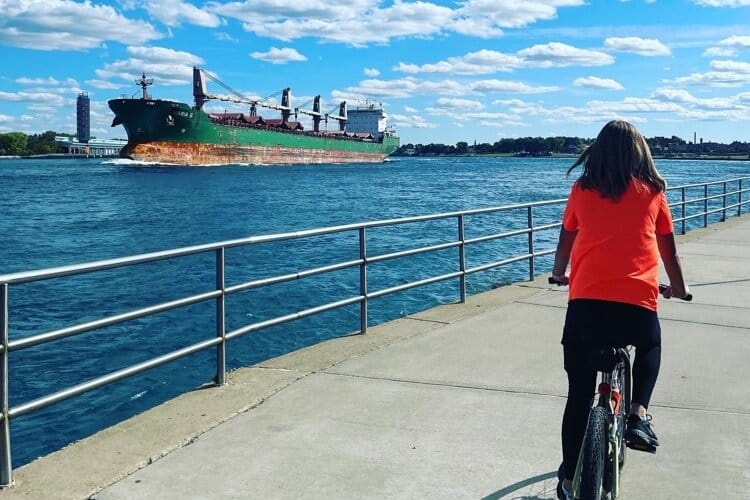
A Regional Shift Towards Increased Pedestrian-Friendliness
Before reconstruction begins, the city and MDOT will pilot the road diet to collect data, evaluate traffic flow, and make adjustments ahead of the full buildout.
Erik Tamlyn of Port Huron’s Transportation Service Center says more communication will roll out as construction approaches, especially with work scheduled on the downtown bridge at the same time.
“I think long term, it’ll be a successful project,” he says. “I will say that short term…when you totally reconstruct the roadway, there’s going to be temporary impact on traffic, and that’s one of the things that we’ll discuss further as we get closer to the project being implemented.”
Local businesses emphasized keeping on-street parking and maintaining sidewalk space—priorities that remain in the final plans.
Port Huron isn’t the first in St. Clair County to move toward bike- and pedestrian-friendly road redesigns. St. Clair’s downtown completed its own reconfiguration in recent years, offering a nearby example of how these projects can reshape small urban corridors.
Author

Related Articles

Thumb Art Spark initiative connects artists, communities, and businesses ahead of 2027 public art celebration
Planned for September 2027, the Thumb Art Spark Celebration will bring communities across the region to highlight existing public art, showcase new projects, and give residents and visitors new ways to explore the places where they live.

Yale’s Heart & Soul Project puts residents at the center of community planning
For the past year, volunteers in Yale have been collecting stories and ideas from residents that organizers hope will eventually shape future community priorities.

Partner Partner Content How St. Clair County Community Mental Health’s Teen Advisory Group is Giving Young People a Voice – and Launching a New Conversation About Mental Health
The Resilience Blueprint, created by teens, for teens, is a podcast that will explore the real conversations young people want to have about mental health, resilience, and the everyday challenges they face.


