
Despite years-long decline of Great Lakes ice, this year’s deep freeze creates winter playground for ice sport enthusiasts
This winter has brought above-average ice cover to the Great Lakes. But despite year-to-year variability, average ice cover has been declining for the past 50 years, with cascading consequences for communities and the environment.
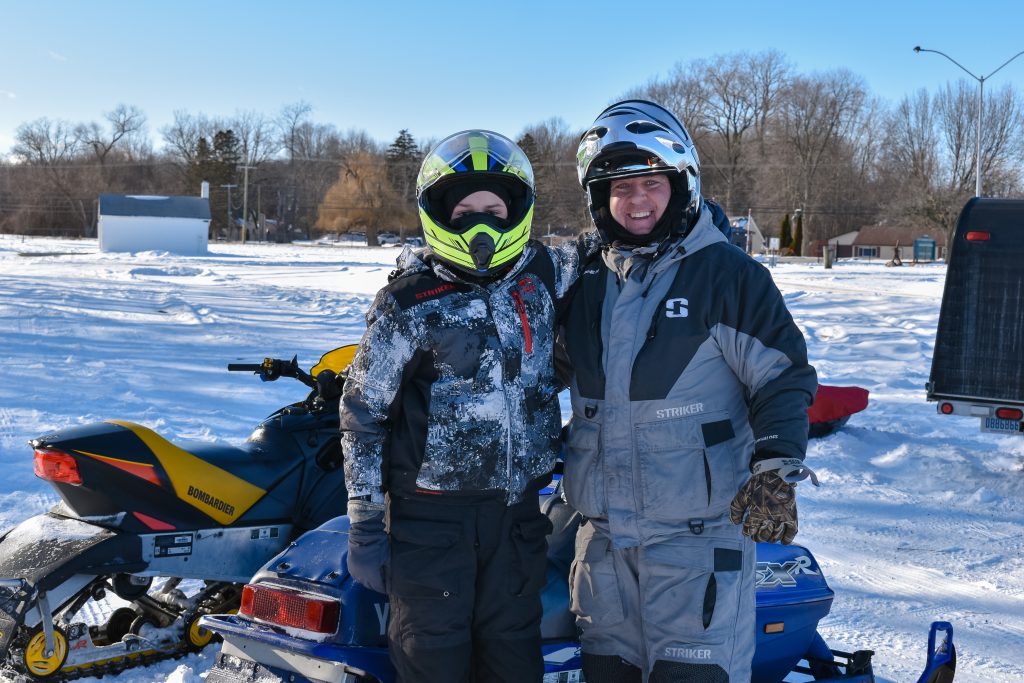
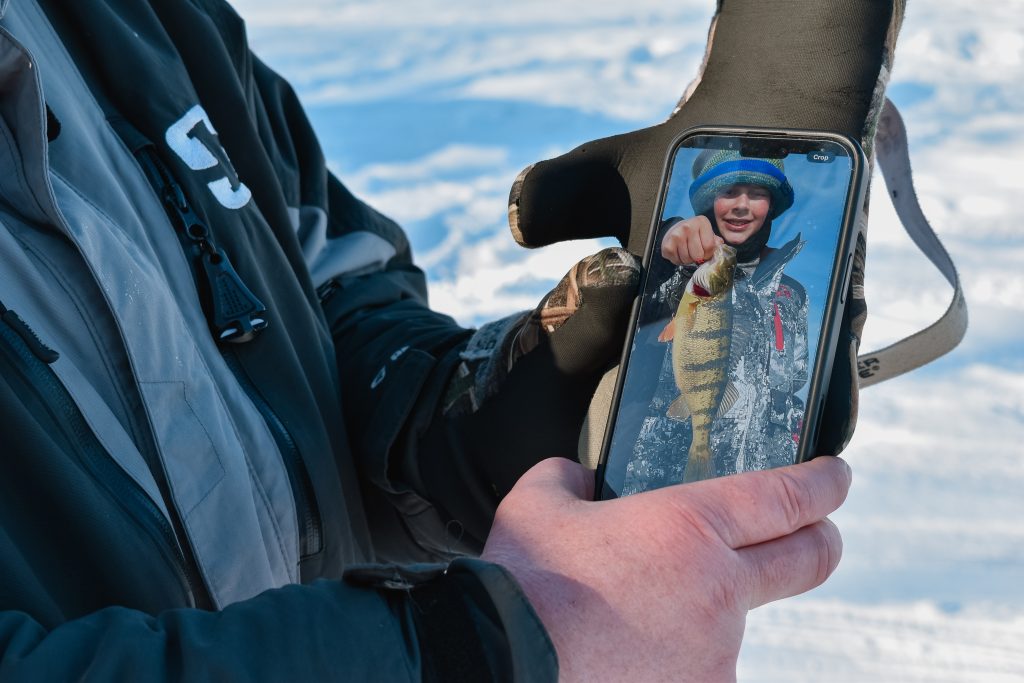
Bundled against the frigid wind, father and son Matt (41) and Brennan (14) Parrott ventured onto the frozen surface of Lake St. Clair near Brandenburg Park in Chesterfield on Saturday with one mission: catch jumbo lake perch.
“It’s really all about the camaraderie and bonding time you get out here,” Matt Parrott says.
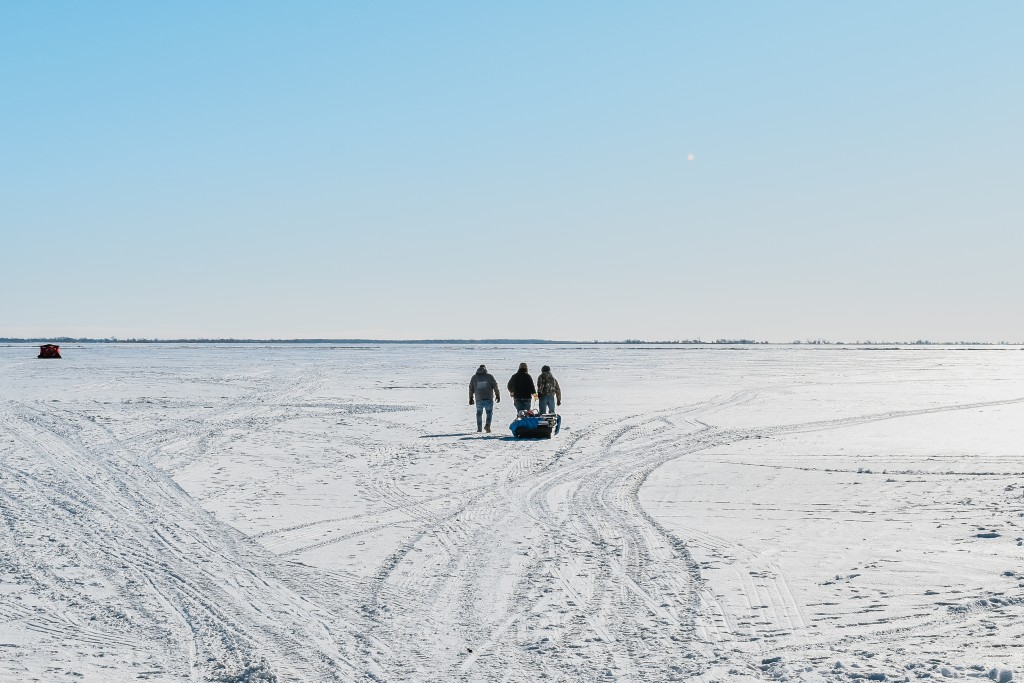
The pair is getting plenty of bonding time this year. But they aren’t the only ones; they say they cut about 10 holes on Saturday searching for quiet spots on a lake crowded with ice fishermen, shanties, and snowmobilers.
“The haul you get really just depends on how many people might be on their snowmobiles within a 20-foot radius of where you’re fishing,” Matt Parrott says. “Too much disruption and the fish will scatter; it needs to be totally still.”
With a winter marked by frigid temperatures and above-average ice coverage, the Parrotts and other winter sports enthusiasts have had a robust season for ice fishing, snowmobiling, and winter activities that require frozen bodies of water.
Despite year-to-year variability, average Great Lakes ice cover has been declining for the past 50 years, with cascading consequences for communities and the environment.
An Icy Winter
On Saturday, Lake Huron was at approximately 57% ice cover, down from its peak of 77% on February 2, according to the National Oceanic and Atmospheric Administration’s (NOAA) Great Lakes Environmental Research Laboratory (GLERL). Lake St. Clair was 100% frozen. Total Great Lakes ice coverage was 45%, down from its peak at 56% on February 5.
This year’s ice cover is above average, but not unprecedented, says James Kessler, a physical scientist at GLERL. From approximately mid-February to mid-March, Great Lakes average ice cover hovers around 40%, and Lake Huron around 50%.
Based on GLERL and U.S. National Ice Center data, since 1973, there have been five years (1977, 1981, 1994, 2014, and 2019) with as much or higher levels of Great Lakes ice by February 1.
Even when temperatures are below freezing, ice cover fluctuates daily as waves and wind break up thin pieces of ice, Kessler says.
This year’s above-average ice cover is influenced by La Nina and a negative North Atlantic Oscillation, weather patterns that bring extremely cold and dry air masses from the Arctic to the Great Lakes, says GLERL Research Ice Climatologist and Physical Oceanographer Jia Wang.
Those blasts of Arctic air rapidly build ice. According to the National Weather Service (NWS), Detroit’s temperatures fell below average by 3.6 degrees in December, 5.2 degrees in January, and 9 degrees in the first five days of February.
For February, the NWS predicts more below-average air temperatures and average precipitation.
Ice cover and climate change
When considered in a broader scale, the annual ice maximum – the highest ice coverage recorded each winter – has declined about 5% per decade since record-keeping began in 1973, Kessler says. Over that time period, that’s a decrease of about 25% in maximum ice and a decrease in the ice season by almost a month.
Far above or below ice coverage in any one year is not unusual, Kessler says. But when examined over decades, average Great Lakes ice coverage is declining due to climate change and rising winter temperatures.
Research suggests that natural year-to-year variability in ice coverage is getting even more extreme as climate change accelerates, he says.
“Even having on average lower ice cover, we’re still going to experience these high years. And this (year) is an example of that, just because there is so much variability around the mean,” he says. “The mean is going down, but there’s so much variation around it.”
Why ice coverage matters
Great Lakes ice coverage – or lack thereof – has a complex influence on the environment, weather, trade and recreation.
Frozen winter landscapes are a necessity for many winter recreational opportunities. Ice tourism and ice festivals boost the local economies of lake- and riverside towns. Less ice means the loss of these treasured winter pastimes.
High ice cover decreases the chances of intense lake-effect snowstorms by cutting off the supply of moisture underneath blasts of cold air, Kessler says. Ice also forms protective barriers for shorelines that prevent erosion and flooding.
Ice also impacts plant and animal ecosystems, Kessler says. Certain fish species – such as whitefish – spawn under shoreline ice, which protects the eggs from turbulent waters. Without ice, many eggs are killed before they hatch.
There is one downside to heavy ice: frozen waters impede large freighters carrying millions of tons of cargo in the Great Lakes’ multibillion-dollar shipping industry, while low ice cover extends the shipping season.
How you can help scientists measure winter ice cover
While ice cover has been captured via satellite for decades, scientists still have little data on regional ice thickness.
Great Lakes Observing System (GLOS) teamed up with researchers at GLERL and the University of Michigan to launch a citizen science initiative to help fill this data gap. Great Lakes ice fishers and other winter recreationists are invited to submit their ice thickness measurements to an online portal. Stipends are available for volunteers.
This data will help improve regional ice predictive models that inform recreation, navigational safety, and ice-breaking operations.
Authors


Related Articles

Native Blend brings indigenous medicine to modern healing
An Indigenous and veteran-owned herbal company based in Port Huron, Native Blend focuses on the philosophy that medicine should serve the community.
Friends of St. Clair River promote Stonefly detection crucial for watershed protection
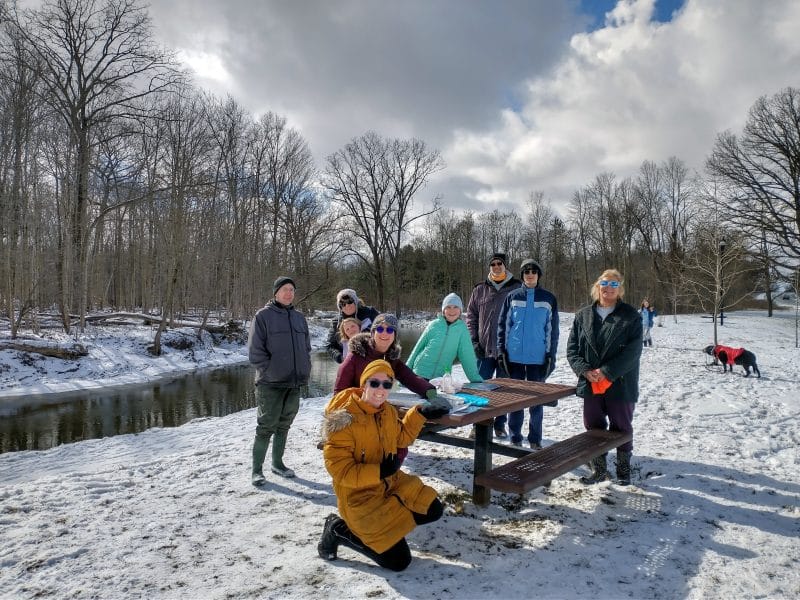
Friends of the St. Clair River will host a winter stonefly search on February 28 at Columbus County Park; data collected during the event will give scientists insight into the health of the Belle River.
Editor’s Picks: Top Stories from The Keel, 2025 Edition
The Keel Magazine’s Managing Editor Genevieve Fox selects her favorite stories from this year, and explains how readers can support the publication.


