
Social determinants of health and whole-person care
Mental health care cannot be effective or sustainable unless people to feel safe, stable, and supported.
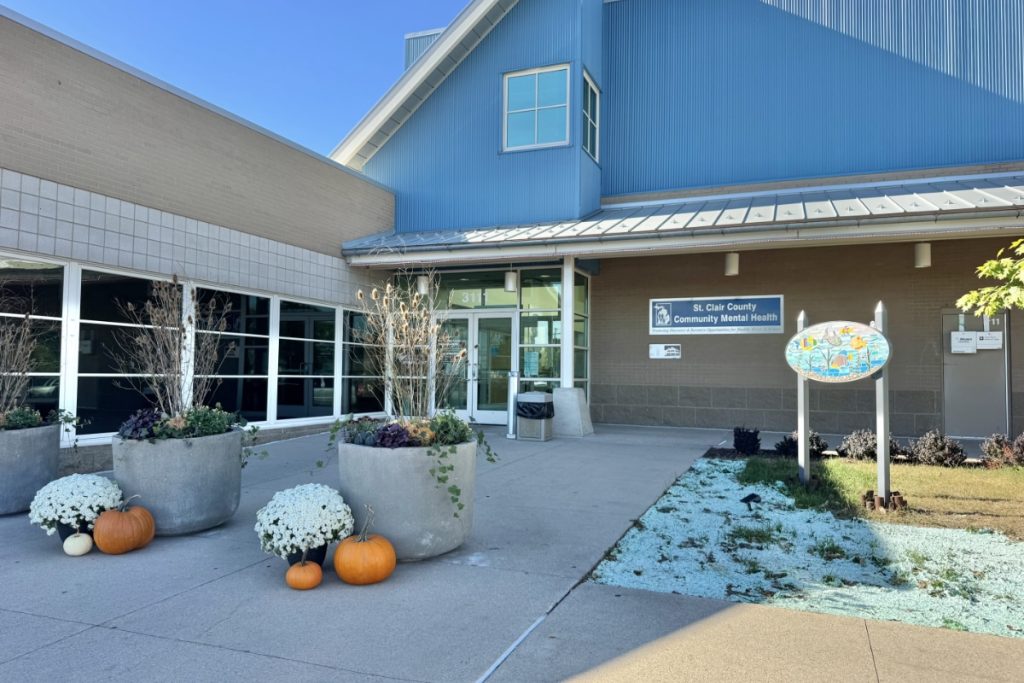
As communities across Michigan struggle with rising costs of living, housing instability, and transportation barriers, mental health providers are increasingly emphasizing the role of social determinants in shaping outcomes. In St. Clair County, leaders at St. Clair County Community Mental Health (CMH) say mental health care cannot be effective or sustainable without addressing the foundational needs that allow people to feel safe, stable, and supported.
Debra Johnson, CEO of St. Clair County CMH, and Kathleen Gallagher, the agency’s chief clinical officer, work at the intersection of behavioral health, community partnership, and public systems. Together, they oversee a network of clinical services, case management, peer support, and community-based interventions designed to meet people where they are, both literally and figuratively.
Johnson and Gallagher recently spoke with MI Mental Health about how unmet basic needs intensify mental health challenges, why whole-person care is essential, and how community collaboration plays a critical role in supporting recovery. The following is a condensed and lightly edited version of that conversation.
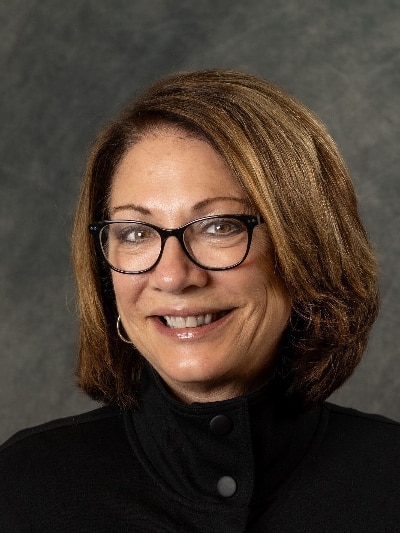
How do social determinants like housing, food security, employment, and transportation show up in the mental health needs you see in St. Clair County?
Debra Johnson: Many of the people we serve experience housing instability, food insecurity, unemployment, or transportation barriers. When someone is already dealing with anxiety, depression, or trauma, those stressors can significantly intensify symptoms. Not knowing where you’ll sleep, how you’ll get to work, or how you’ll feed your family creates constant stress. Housing insecurity is especially scary during Michigan winters.
Kathleen Gallagher: If your basic needs aren’t met, it’s very difficult to focus on anything else. Those concerns take priority — paying utilities, getting groceries, finding a place to stay. When survival is the focus, it becomes harder to engage in mental health care or even think about long-term wellness.
How do unmet basic needs affect someone’s ability to engage consistently in mental health treatment?
Johnson: It’s difficult for anyone to focus on recovery when they’re worried about where they’ll sleep or how they’ll get to appointments. Transportation is a major barrier, which is why SCCCMH provides mobile services and meets people where they are whenever possible. Still without those basic needs being met, it is difficult to provide effective treatment.
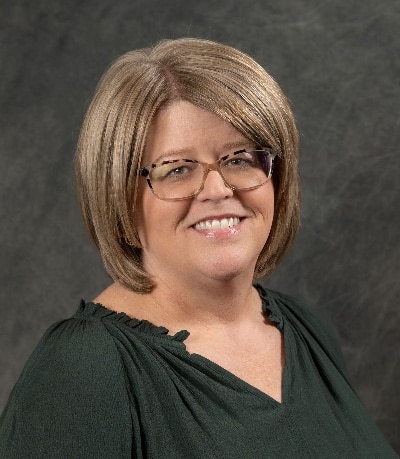
Gallagher: We often see people miss appointments because they’re trying to secure food or housing. If someone isn’t staying in the same place every night, it’s challenging to keep track of appointments. Even with transportation partnerships, access remains limited, especially in outlying areas of the county.
How does Saint Clair County CMH help people connect to resources beyond clinical mental health services?
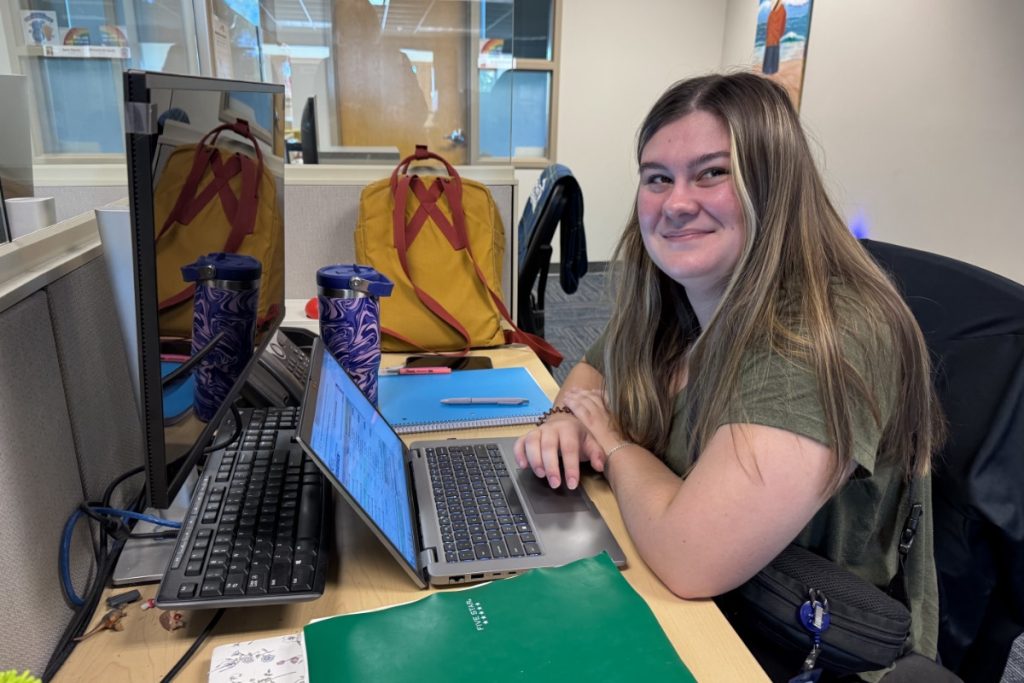
Johnson: One of the strengths of the public behavioral health system is our focus on the whole person. Our case managers, peer support specialists, and mental health assistants help people navigate housing, food access, and other essential resources. They know community resources well, everything from churches and food pantries to transportation options.
When SNAP benefits were reduced, community partners came together quickly. We expanded access to food through many avenues and brought food directly. Transportation barriers mean resources must be mobile to truly be accessible.
Our staff also stepped up in remarkable ways, donating food, assembling non-perishable meal bags, and organizing a giving tree that supported nearly 700 individuals during the holidays. Many people asked not for gifts but for basic necessities like soup or coffee. That reality underscores the level of need we’re seeing.
Gallagher: Helping people navigate these systems can be overwhelming. Our staff are constantly identifying new resources, sharing information, and problem-solving alongside the people we serve. That support makes a huge difference.
What community partnerships are most critical in addressing the non-clinical drivers of mental health outcomes?
Johnson: Partnerships are essential. We work closely with the YMCA, Community Action Agency, St. Clair County Health Department, Harbor Impact Ministries, Salvation Army, Emergency Operations Center, the agencies of the Community Services Coordinating Body, the Community Foundation, local churches, and school districts. Schools are particularly important in identifying families experiencing homelessness or housing instability so we can coordinate support.
We’re fortunate to be in a community where organizations collaborate rather than compete. That coordination matters.
Are there populations you’re seeing disproportionately affected by these challenges?
Gallagher: Single-parent families and people on fixed incomes, such as those receiving disability or veterans benefits, are being hit especially hard. Those income levels haven’t kept pace with the cost of living. We’re also seeing people who previously managed to get by now struggling as prices increase.
About 70% of individuals using our food trucks don’t receive other benefits, which shows how widespread the impact is. We also see significant challenges among people transitioning out of incarceration or long-term hospitalization.
Why is addressing social determinants essential to effective mental health care?
Gallagher: Basic needs are the foundation. When people have stable housing, food, and utilities, everything else stabilizes. It becomes possible to engage in treatment, stay connected to services, and work toward goals. Without that foundation, meaningful change is extremely difficult.
Johnson: Mental health care doesn’t happen in a vacuum. When we invest in whole-person care and community-based support, we see healthier outcomes. People need to feel safe, supported, and hopeful, and addressing social determinants is how we get there.
The MI Mental Health series highlights the opportunities that Michigan’s children, teens and adults of all ages have to find the mental health help they need, when and where they need it. It is made possible with funding from the Community Mental Health Association of Michigan, Center for Health and Research Transformation, OnPoint, Sanilac County CMH, St. Clair County CMH, Summit Pointe, and Washtenaw County CMH and Public Safety Preservation Millage.
Photos by Leslie Cieplechowicz.
Photos of Debra Johnson and Kathleen Gallagher courtesy subjects.
The MI Mental Health series highlights the opportunities that Michigan’s children, teens and adults of all ages have to find the mental health help they need, when and where they need it. It is made possible with funding from the Community Mental Health Association of Michigan, Center for Health and Research Transformation, OnPoint, Sanilac County CMH, St. Clair County CMH, Summit Pointe, and Washtenaw County CMH and Public Safety Preservation Millage.
Related Articles

More Than a Gym: Lift Land Fitness builds community in Yale
Located in the small rural community of Yale, Lift Land Fitness offers a wide range of classes. But the owner says the goal has always been more than exercise.

Partner Partner Content More Than Awareness: What inclusion really means and why it matters to all of us
When communities commit to inclusion, people with developmental disabilities experience greater independence, improved mental health, and stronger social connections.
When everyone is welcome: How Michigan’s CCBHCs are changing care
CCBHCs have been improving access to quality mental health care for Michigan residents since 2021.


