
Native Blend brings indigenous medicine to modern healing
An Indigenous and veteran-owned herbal company based in Port Huron, Native Blend focuses on the philosophy that medicine should serve the community.
The Community Correspondent role provides readers with on-the-ground and inclusive stories about the Port Huron area. This is made possible through funding provided by the Community Foundation of St. Clair County.
In Port Huron, healing doesn’t always come in a prescription bottle. Sometimes, it comes in the form of a deer tallow soap, a hand-blended herbal tea, or a salve made from plants gathered in Great Lakes forests.
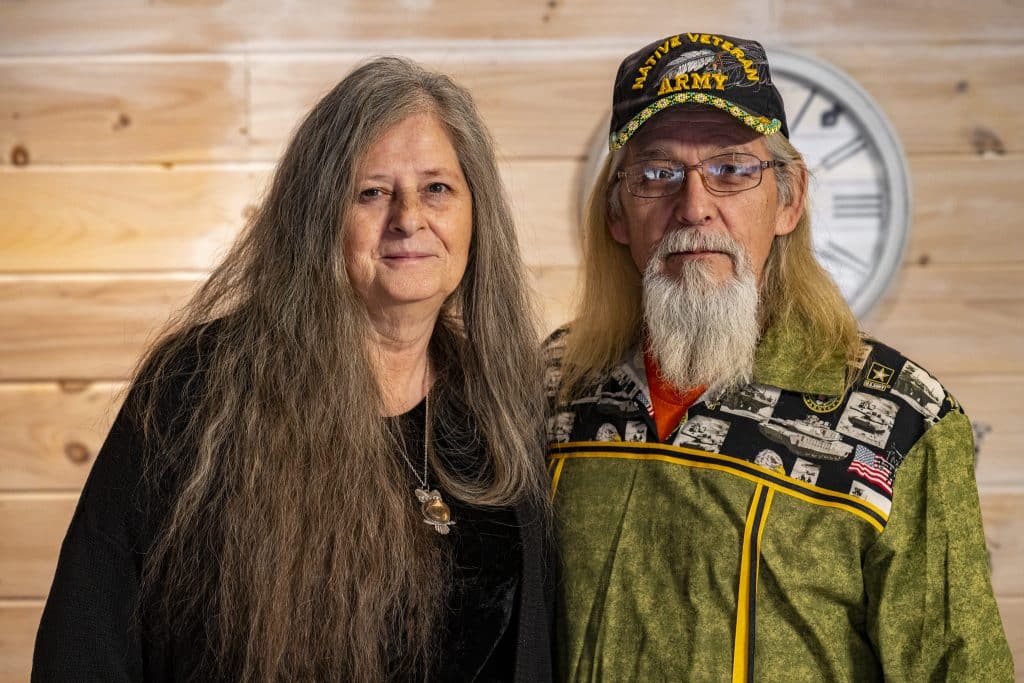
Native Blend, an Indigenous and veteran-owned herbal company founded by Donna and Dennis Dunlap, is built on a simple but deeply intentional philosophy: medicine should serve the community, honor the land it comes from, and be made with care.
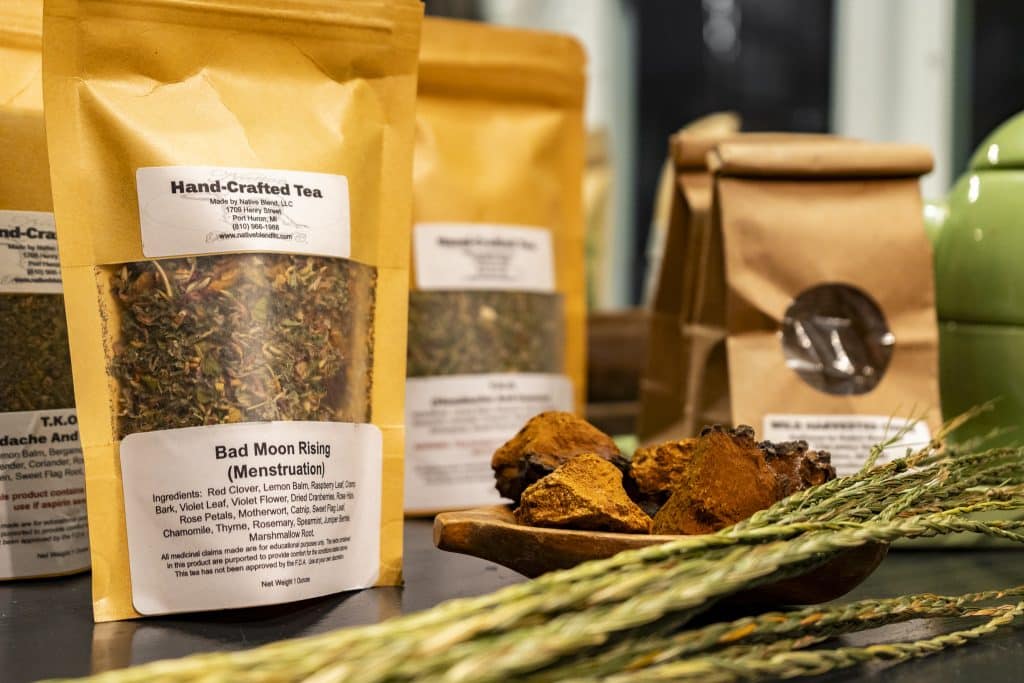
Operating out of their home, Native Blend specializes in handcrafted herbal products, including deer tallow soaps, salves, bath teas, smudge sprays, and loose-leaf herbal teas. Every product is rooted in Indigenous knowledge systems and shaped by lived experience rather than wellness culture.
“We didn’t get into this to make money,” Donna Dunlap says. “The whole purpose for our company is to provide a service to our community.”
A Blend of Traditions
Native Blend’s name reflects its origins. Donna, who is white, grew up surrounded by herbal knowledge—her great-grandmother was a holistic healer and the only doctor in Bardstown, Kentucky. Dennis, who is enrolled in the Lac Courte Oreilles Band of Lake Superior Chippewa Indians (often referred to as LCO), brought Indigenous teachings rooted in subsistence living, ceremony, and respect for the natural world.
Together, their knowledge systems merged organically.
“Our name came from a blend of traditional Native medicines and what I call hillbilly holistics,” Donna says with a laugh.
That blend became tangible while gathering plants with Dennis’ family. While walking in the woods, Donna recalls his uncle pointing out plants and saying, “Look at all this medicine.” Donna could identify many of the herbs, while he filled in how they were traditionally used.
Those moments became the foundation for Native Blend’s approach: shared knowledge, passed down through observation, necessity, and trust.
Medicine Born From Need
Native Blend didn’t begin as a business venture. It began with a child in need of relief.
A relative’s granddaughter had a severe case of eczema, where she couldn’t tolerate soap at all. After dermatological treatments failed, Donna began experimenting, researching oils and herbal properties, and eventually discovered deer tallow’s similarity to human skin.
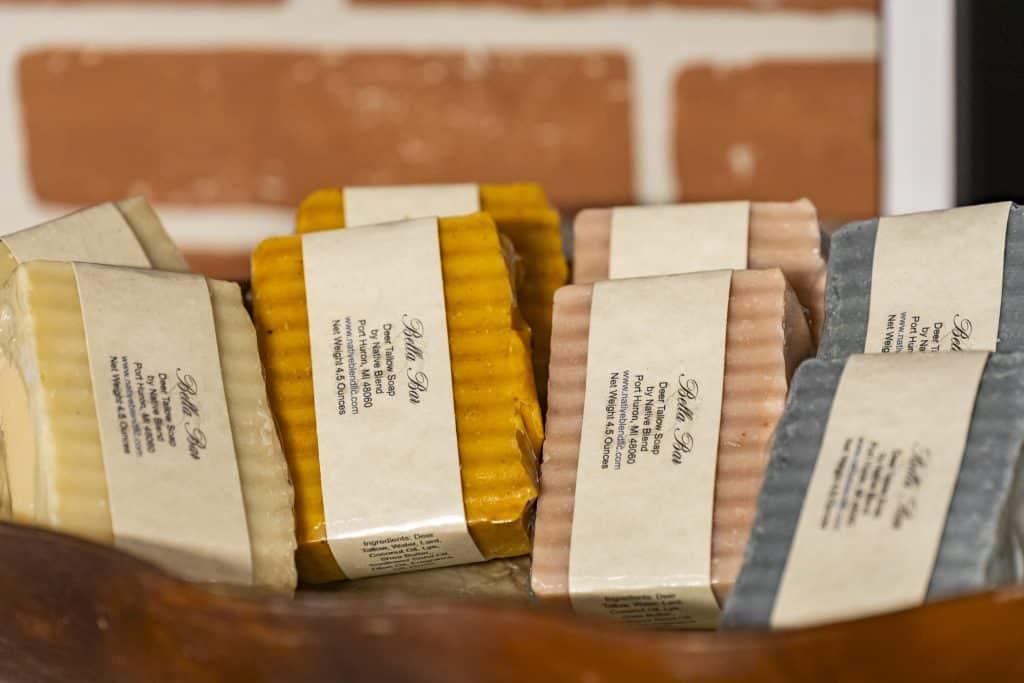
“It took me two and a half years to make a soap that child could use,” she says. “She was our guinea pig.”
That soap—now known as the Bella Bar, named after the child, Isabella—remains Native Blend’s cornerstone product. Now a teenager, Isabella still uses it exclusively.
Many of Native Blend’s products were created this way: out of immediate need. A salve to ease carpal tunnel pain so an elder could bead again. A tea to support asthma. A topical blend to relieve muscle spasms when pharmaceuticals weren’t an option.
“Products are made out of necessity or request,” Dennis Dunlap says. “People ask us, ‘Can you make this?’ and we try.”
Respect for the Land and the Animal
Central to Native Blend’s practice is harvesting their own botanicals under treaty rights, traveling across Michigan and into Wisconsin to gather plants at peak maturity. Donna emphasizes safety and responsibility, researching every herb for contraindications with medications before it’s ever used.
They don’t buy herbs. They grow them, wildcraft them, and prepare them by hand.
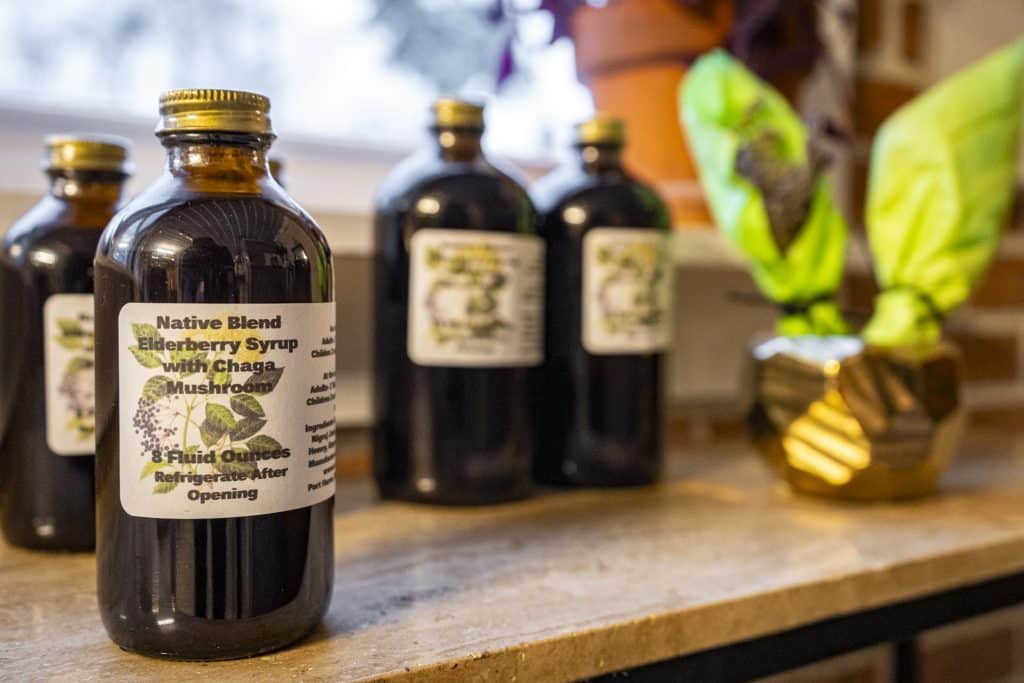
The same respect extends to their use of deer tallow. The fat used in their soaps and lotions is a byproduct of subsistence hunting, harvested traditionally and with intention.
“Respect for the animal is incorporated into the entire process,” Donna says. “Nothing is wasted.”
That ethic carries through the business as a whole. Native Blend prioritizes repurposing materials, reusing bottles, and keeping usable materials—like deer fat, bones, and even spent shell casings—out of landfills. Dennis incorporates reclaimed shell casings into his dreamcatchers, while other materials are sterilized and reused whenever possible.
Healing Beyond the Physical
Native Blend’s understanding of medicine extends beyond the body. Many of their products are tied to the Ojibwe medicine wheel and the four sacred herbs—sweetgrass, tobacco, cedar, and sage—each representing a direction, a color, and an aspect of life.
When tribal members involved in the repatriation of ancestral remains needed a way to smudge in spaces where burning herbs wasn’t allowed, Native Blend created a plant-based smudge spray using all four sacred medicines.
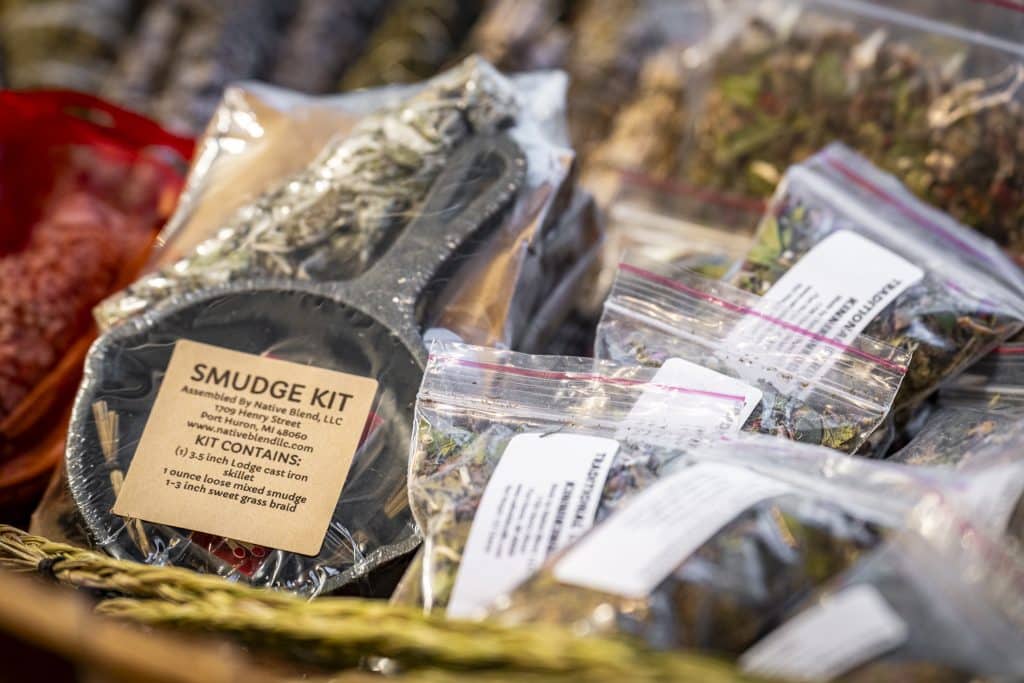
“That’s community care,” Dennis says. “It keeps us connected with our culture, our kids, and our grandkids.”
That connection has also led them to teach herbal classes, create smudge kits for elder programs, and produce educational videos for Native American health organizations.
A Small Business, Held Together by Community
During the pandemic, when powwows were canceled and many Native vendors lost their income, Native Blend found unexpected stability through Social Distance Powwow. The Facebook initiative helped Indigenous artists and vendors sell online.
“That kept us going,” Donna says. “We panicked when everything shut down—and then that opened up the whole country for us.”
Today, Native Blend continues to operate without a brick-and-mortar storefront. Products are available through their online shop, with local pickup available for Port Huron-area customers.
“We’re not looking to get rich,” Dennis says. “We’re just looking to help people.”
For Donna, success looks simple: staying warm, keeping the lights on, and continuing the work.
“Our day in the office doesn’t suck,” she says. “We spend summers in the woods or at powwows, and winters producing as a family. That’s enough.”
Photos by Harold Powell.
Author

Related Articles
When everyone is welcome: How Michigan’s CCBHCs are changing care
CCBHCs have been improving access to quality mental health care for Michigan residents since 2021.
Transportation: An overlooked barrier to mental health care
Collaboration ensures Allegan County residents get mental health care when they need it.
How a sisterhood of dentists is expanding public health across Metro Detroit
A collective of African American women dentists delivers public health care, mentorship, and trust to underserved patients across Detroit, Wayne County, and Macomb County.


